Size a rug from where seats and feet land
Find a rug size that makes the room easier to use and protects the floor beneath it.
Draw the places people sit before drawing the rug
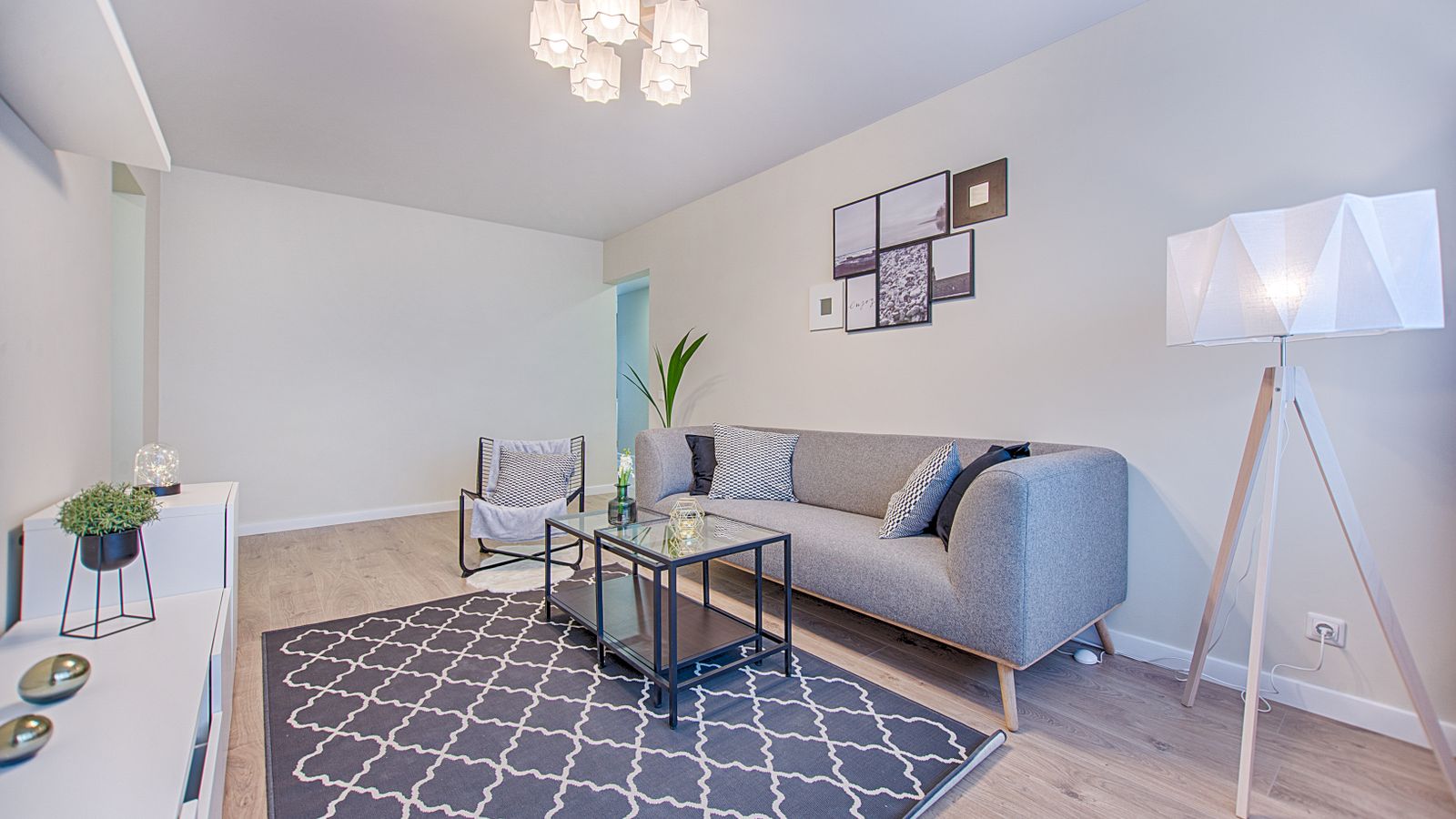
A rug sold as a living room size has no way of knowing where the sofa feet will stand. Start with the arrangement you use, even if it is slightly off center. Point the chairs the way they normally face when somebody is in them. Put a coffee table at the distance where it is useful, leaving a route to sit down. Look for clusters of furniture that people treat as one place. The reading chair may belong with the sofa for conversation and with a side table for light. It needs floor under its front legs wherever those uses actually put it.
Choose whether you want all feet on the rug, front feet on it or a small rug inside the furniture. Each can work if the bases stand evenly and the edge stays out of the main route. Measure the distance between the main feet and the width of the furniture group before looking at sizes. Draw the dimensions of one possible rug with a tape or other marking method suitable for the unmarked floor. Bring a long straight object into the trial to visualize a raised edge, then remove it when you are finished. Keep walkways safe throughout the test.
Walk around the group from the point where guests enter, then walk from the kitchen with a dish in your hands. A large rug can create a generous patch for conversations yet put its longest edge across the only route to the hall. A smaller rug can appear neatly centered from the sofa but look placed too far inside the seating zone from the entrance. Test doorways and chairs together before using the marks to decide. If the best outer edge lines up a little differently than the room wall, judge it from the seats and paths that give it a purpose.
Pull the dining chair the full distance
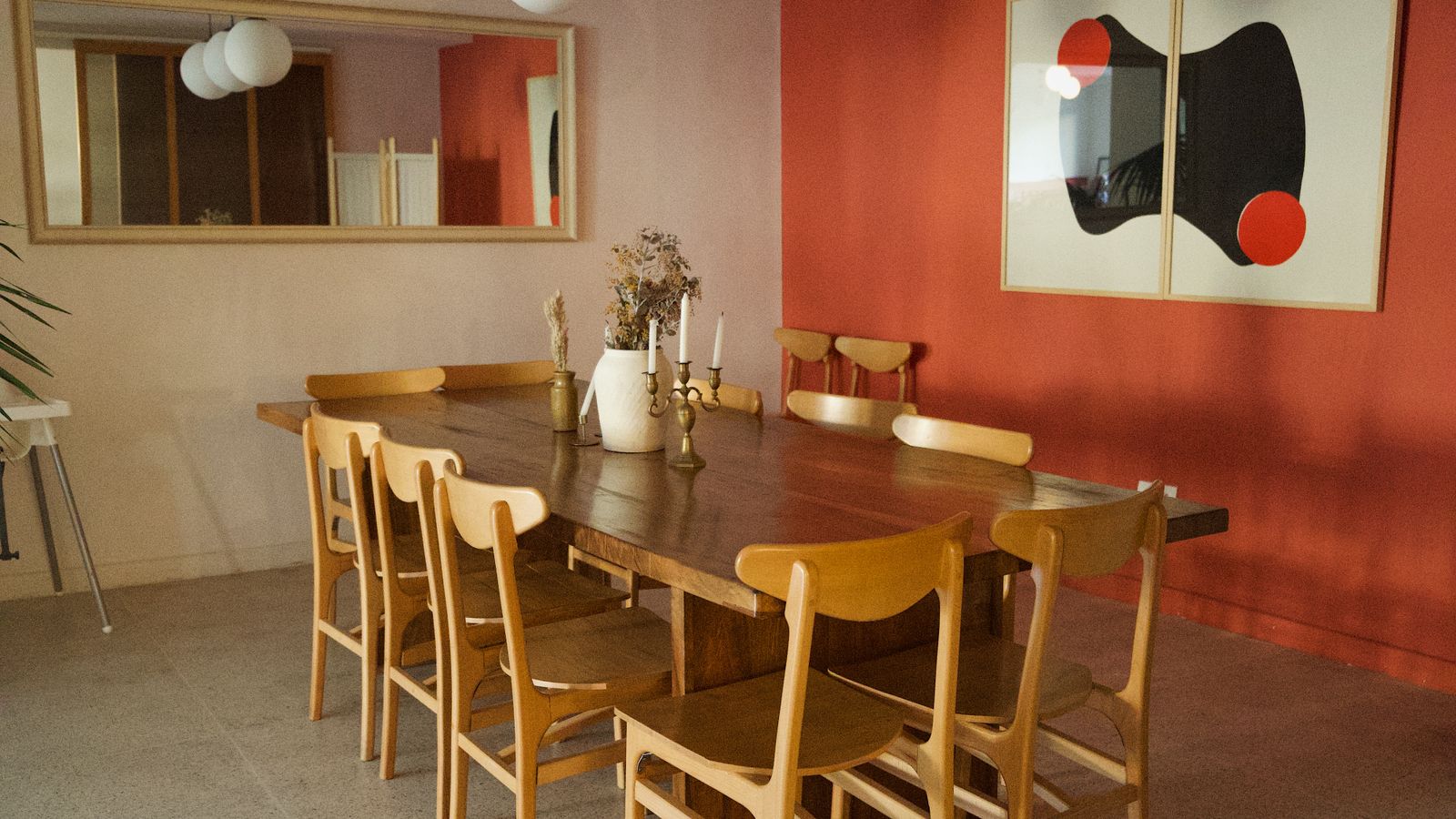
Place each chair where a person sits and pull it out far enough to sit naturally. Watch the rear feet, especially on the most frequently used side and at the head. In a narrow dining room, someone may pull a chair straight back while another person turns it slightly to sit. Both moves should be possible without a foot finding a ledge under it. Run a trial with the table leaf in place if you use one. A rug that works for the smaller table can become too short when both end seats move outward.
Measure from the tabletop edge to the widest point reached by the rear chair legs, then repeat on the side where someone needs to pass. Keep a usable margin beyond the last leg position rather than deciding that a leg neatly touching tape is enough. The rug size you arrive at depends on the chair depth, table arrangement, easy approach and where the rug may end without affecting another route. A generic allowance leaves those questions unanswered.
Check the shape of chair feet. Angled legs can move farther outward than the seat appears to move, and a small square foot may feel a thick edge more readily than a broad base. If the room is too narrow for a rug under all the chair movement, it can be more practical to keep the dining floor fully visible. You can still use a rug elsewhere to make another part of the room softer. A test with two people, one sitting and one walking past, will give a better answer than a carefully centered measure taken with every chair pushed in.
Let the floor keep some breathing room
Look at where the rug meets the walls, vents, built-ins and thresholds. A broad wooden reveal can look useful on one side if it forms a path between two doors. A narrow, irregular gap behind a cabinet can trap dirt and make an otherwise generous rug harder to vacuum. Mark where a cleaning tool actually fits. The reveal does not need to be the same width on every side. It should feel intentional from the angle where you normally see it and leave ordinary movement around the room intact.
Open the door fully without the rug in place and measure the lowest clearance across its whole swing. Calculate the proposed thickness using both the pile and backing and the pad. A door can drop nearer the floor midway through its movement, especially if the surface is uneven or the hinges or floor are older. Ask the supplier about total thickness and variability where a binding or raised border is part of the design. If there is very little margin, move the rug clear of the swing or choose a different arrangement rather than planning on a door brushing the fibers every day.
Where someone uses a mobility aid, a heavy chair or a tool that rolls, see how the actual equipment behaves on the surface while preserving access and safety. Lay an approved small sample in a stable position for hand and visual checks, and ask the supplier about an appropriate low profile and edge. Ensure the rug does not obstruct ventilation or any route that serves as an exit. A floor that feels good under bare feet can still present an awkward transition from its edge. The safest layout is the one everyone needs to be able to use.
Choose pile and pad as a pair
The surface is only one part of a rug's behavior. Check the maker's directions for any recommended pad or backing and compare those with the floor product’s care instructions. A pad needs to hold the rug reliably without marking the floor underneath. Coatings and finishes may have limitations about what can remain in contact with them. Ask the floor or rug supplier when directions are unclear, especially for a newly finished floor. A change in pad can alter the way a door clears, how the rug rolls under foot traffic and how easy it is to reposition for cleaning.
Think about the type of dirt you bring into the room. In a house where a dog comes in from outside, grit and shedding are separate problems. Bring a sample home if permitted and look at it beside some of the ordinary fabrics in the room. Ask which cleaning methods can be used and whether power brush settings have specific limits. A fiber described as washable may still require a method impractical for a large rug. Check what can be done at home and what requires a service. If a spill is likely to go through to the floor, know how the rug and pad can be lifted for prompt cleaning.
Make a small trial without stressing the sample. Carry it across from the family room to the bright entrance, and notice whether the surface direction looks different when viewed against the main light. Under a sunlit window, directional pile may look paler from one side than it does from another. See it where most people stand and where you sit most often. If a large border or large repeating pattern is part of the piece, ask how that pattern appears near the cut edges and under the pieces of furniture you expect will cover it.
Adjust the plan before the size sets it
Move the tape a little outward or inward on one side. Ask whether the room looks better because the rug is closer to a large piece of furniture or because an awkward gap vanished. Try moving a chair first. That change may allow a common size to work and keep clear floor along the busiest route. Turn the tape rectangle by ninety degrees, even if you think the shape is obvious. The alternate view often makes it clear which line needs to belong to the furniture and which line needs some distance from a doorway.
Look at the available sizes in the collection only after these checks. Compare each real listing to your dimensions. A nominal size may allow for minor variation, and handmade pieces can differ. Ask for the actual measurement if a binding, niche or step leaves the usable range small. Think about which dimensions would be tolerable if the supplier’s stated variation falls in either direction. A style you love can be a poor match at the size it happens to come in. Geometry does not improve after the delivery truck arrives.
Draw the final rug and portable furniture on a notebook page and record the intended height. Take a photo from the entrance and one from a comfortable seat. When several people are deciding, those views let them compare the same version and remember why the rug may be farther from a wall than expected. If the new rug will need occasional rotation to distribute wear, check whether furniture can be moved safely and whether the pattern still makes sense facing the other way. Consider the route for taking it out for cleaning before it ends up beneath a piece you cannot easily lift.
Check the edges after the room goes back into use
Once the rug and any suitable pad are in place, set the normal chair positions and open every affected door. Make sure the edges settle as expected according to the maker, and avoid leaving a corner in a walking route while waiting for it to flatten. A rug slipping out of its place can call for a compatible pad or a different arrangement. A curled edge or loose binding deserves attention before it becomes a daily fixture.
Keep the care information and the approved pad details together. After the room has been used through a meal or a busy evening, look at the seat paths again. A dining chair should slide the needed distance without catching. At a sofa, it should be easy to find firm footing when you get up. A visitor should reach the next room without thinking about where to put a foot. When the layout passes that small test, you can turn your attention back to the way the room looks.