Check a table finish before asking it to take daily wear
Understand the tradeoffs between wood table finishes, heat protection and repair.
List the marks you would rather prevent
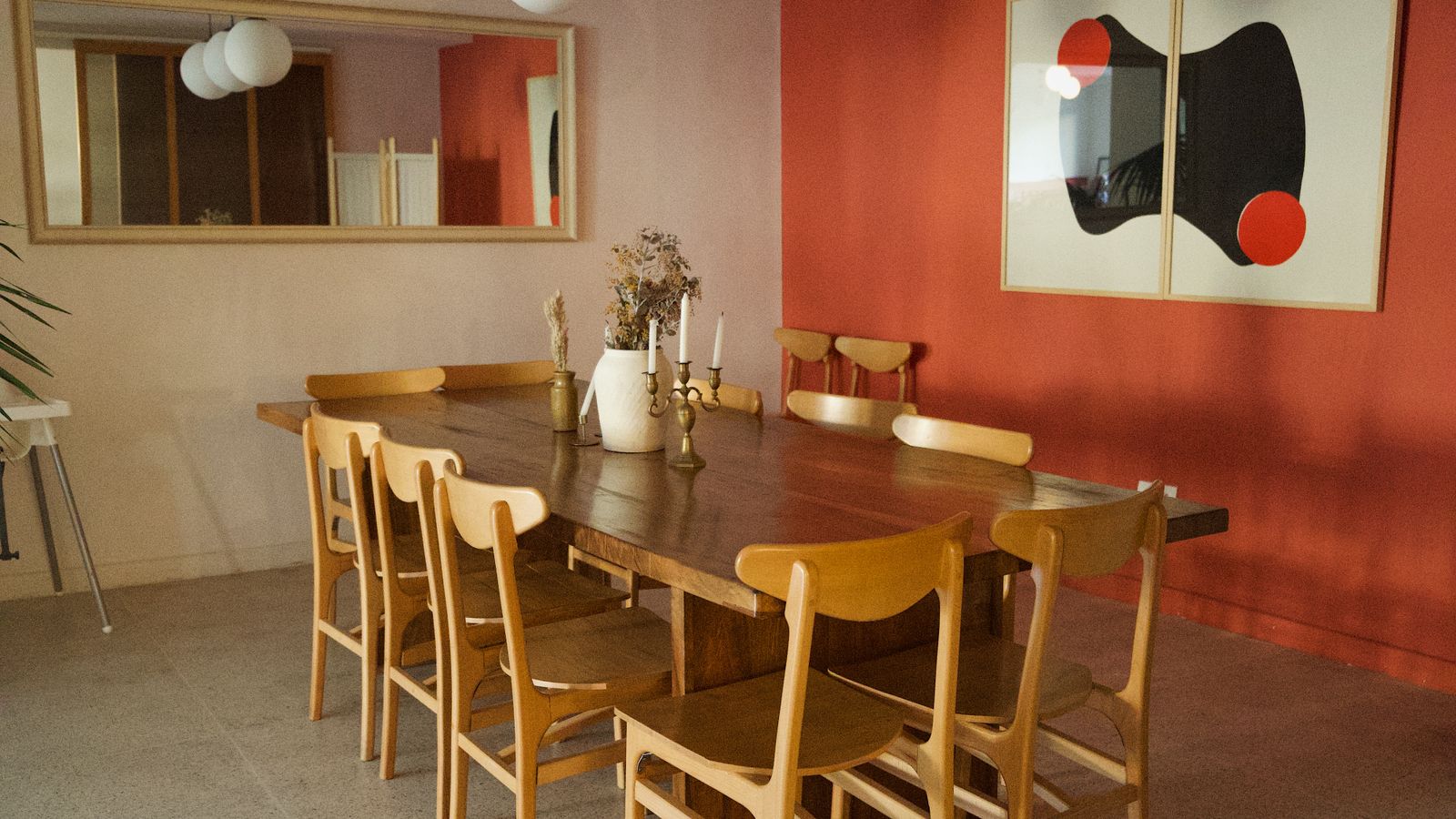
Before choosing the finish for a wooden table, picture a meal that does not look like a photograph. There is a spare hot dish arriving from the kitchen, a glass sweating onto the wood and a child pushed far enough away from the edge to leave a trail of soup. After the last person gets up, somebody has to clear the surface. Decide which of those moments should be made easier. One household needs a finish easy to wipe after crafts. Another can keep a protective cover nearby and cares more about whether the wood can be repaired when it finally takes a scratch.
Look at your current table. A dark mark beside a flowerpot may tell you more about the care routine than six bright showroom samples. Draw the shape of the top on a page and mark where glasses, hot cookware, work equipment and heavy chairs affect it. Consider the ordinary objects that might catch the edge, such as a bag carried around a tight corner. Ask the maker how the exact finish handles those uses and what protection it requires. An answer that deals with the action is easier to evaluate than a description of the table as suitable for busy family life.
Distinguish the look you want from the feel you want. A surface may provide a clear view of wood grain yet feel different from a lightly finished display. Some marks matter more on a tabletop used for writing than on a side table that mostly holds a tray. Run your fingers over an approved sample and see whether its feel suits how you use the room. It is reasonable to accept an occasional mark if you know how it will appear and how to care for it.
Ask about the exact finish and its care sheet
Ask for the finish name, product literature and the care instructions that apply to the actual table. The appearance of wood alone does not identify the treatment. Even similar-looking tables from the same maker may be supplied with different finishes. Find out which care rules apply to the top, edge and base, and whether the cleaner you use around the rest of the room is permitted here. Ask how long before the table, or a recently finished replacement piece, can be used or covered. Use the finish maker's directions wherever possible and confirm uncertainty with the furniture maker.
Talk about water, heat and cleaning as three separate matters. A finish that tolerates a quick wipe can still call for prompt drying. A surface kept safe near a warm cup may need a different sort of protection under a pan from the oven. The written sheet should tell you which ordinary protections the seller expects a household to use. Ask how to deal with a plant saucer, drinks with ice or a spill left on the table through the rest of a meal. Keep answers linked to the finish, because advice for an older table or a noticeably different coating can be poor guidance for a new one.
If the maker gives you a finished offcut and allows a test, stay within its directions. Try the approved wiping method and look at the surface as it dries. Compare it to an untouched part in the same light. A comparison may reveal a little change in sheen or leave no difference you can see. Avoid putting heat, chemicals or standing water on an item somebody else owns. A demonstration carried out within the care sheet will tell you how easy the expected routine is to follow.
Look across the tabletop before looking down at it
Take the sample to the places the table will be seen. Near a pendant, an overhead view can make the grain easy to read and the sheen look balanced. From a chair at the end, a reflected window can spread across the same sample. Look along the length of the top in the direction of that light. Compare the finish at breakfast and after the main room light comes on. If marks from wiping the sample are visible, see whether they stay visible during a meal or only at a particular standing angle.
A bright reflection can emphasize small changes within the wood. A less reflective surface can show the texture in a different way. Both appearances may look fine in a large empty room and quite different against a busy rug, a stone sideboard or black chairs. Bring a fabric swatch or place setting into the check when it will sit on the table frequently. A finish that is an excellent match with bare wood may be less important than a combination you like with the ordinary items on top.
Think about the scale of the final surface. The piece in your hand may come from a quiet part of the board. Ask to see a larger sample, a table already finished in the same way, or the maker's description of expected variation. Examine how bright the reflections are in the largest available view. If a bit of sheen makes a room feel brighter, keep it in consideration. If everybody at one side sees a broad window reflection instead of what is on the table, a different sheen or table position may do more good than another coat of the same finish.
Give edges, extensions and joints the same attention
Look at where a cup naturally rests beside an extension joint or near the connection between two pieces. Ask the maker how to clean there and what to do if liquid reaches an opening. A continuous-looking top still has edges and components where water can remain. The top profile matters too. A vertical rim that feels smooth on a showroom model might meet a small knee or an elbow differently at home. Sit at the sample or mock up the height if possible. Run a light cloth past the edge as you would after clearing the table.
Check extension leaves in their normal stored and open positions. Ask whether they need the same care and how they should be handled during cleaning. A leaf stored for long periods away from the main top may age in different conditions. That is worth asking about ahead of time if a close visual match matters. If the extension requires a person to lift a section, see whether the handling method leaves a natural dry place to hold it. A finish you can clean comfortably when the table is assembled is more useful if its movable parts remain easy to operate too.
Notice whether the chair arms approach the table edge from below or can touch the top when pushed in. Try the chair you will really use. A repeated knock at the same place can matter more to an edge than the general wear it gets during a meal. If you are inheriting a table, inspect old dents and ask whether they are cosmetic or need attention before further use. A furniture repairer can advise on damaged joints and appropriate work without guessing from a picture.
Make protection easy to reach
Give trivets and coasters a location near the actual trip between the oven and the table. If the trivet lives under three platters in a cupboard, whoever is holding a dish will have a good reason to set it down in the first clear place. One rule people can follow is to leave the trivet at the end of the table before bringing a hot dish into the room. Choose a protective item appropriate for the expected heat and compatible with the finish, following the directions for both. Where the maker calls for a protective layer, check that it suits the use and does not trap dampness against the surface.
Keep a suitable cloth where a spill usually occurs. If different products are needed for dust, a damp wipe or an accident, record the distinction somewhere everyone using the table can find it. Put oily or chemical cleaning products away appropriately. A care routine that takes a minute has a better chance of being used than one that calls for a special kit barely anyone knows exists.
If the table doubles as a hobby area, give project equipment a removable protected surface and a place to go at mealtimes. Any mat or sheet that will remain in contact with the top should be allowed by the finish instructions. Avoid covering the piece during a period when the surface needs to cure or breathe according to the maker. An easy transition from model building to an ordinary meal may be the most useful thing your material choice can support.
Know how a repair would begin
Ask whether a small mark can be addressed locally, whether work on a larger area would show and whether professional repair is advised. Save the finish name, care sheet, purchase information and the maker's response in the same record. If the furniture came from a different owner and the finish is unknown, ask an appropriate professional to identify likely options before applying a product. A finish mask or stain remover that worked on another piece gives little assurance on a table with a different surface history.
Once the table is in place, watch it through a few days of real use. Find where the wet glasses land and make the nearest coaster easier to reach. Look at it after an ordinary wipe, from a chair rather than a camera. The right finish shares the work with the way people eat, study and clean. Any person at the table should be able to clear their dishes and leave it ready for the next thing the room needs to do.