Give a dining area enough room to move
Make a dining table work for everyday meals, guests and the route through the room.
Start at the busiest side of the table
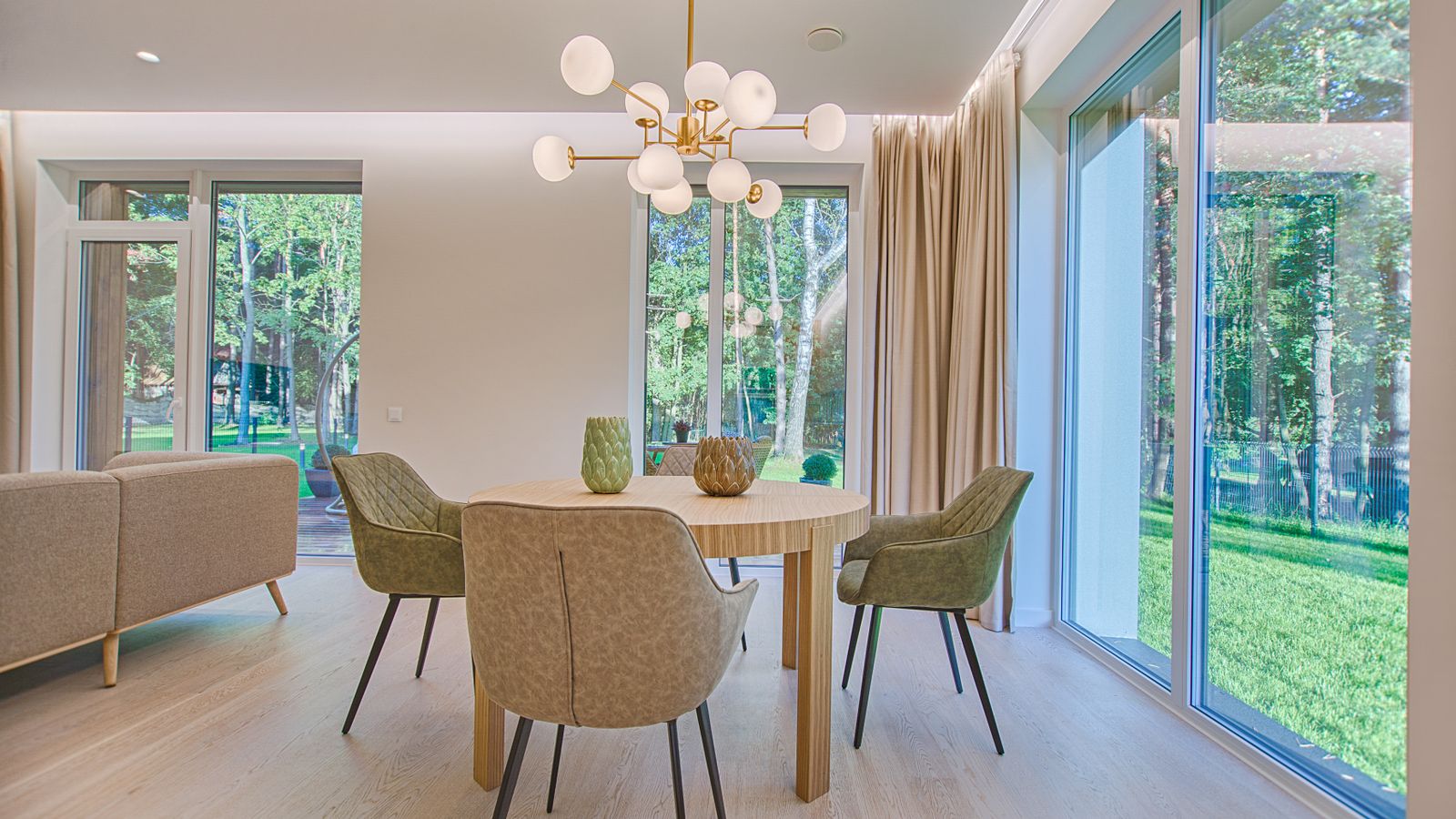
Put a chair where you plan to have supper, then open the nearest kitchen drawer. Try walking to the sink with the chair in that position. In a room with a good amount of floor, you may have plenty of space. In a compact room, the two people carrying plates from the kitchen may be using the same strip of floor as the person scooting a chair back. Move the chair to the other side and repeat the experiment. The side with the traffic often tells you more about the right size and position than the dimensions of the room do.
Use low-tack tape or sheets of paper to show the proposed tabletop. Mark the corners and the exact spots where its legs meet the floor. If the table has a pedestal, put a box in the middle of the taped shape to represent its widest part at foot level. Place chairs around the outline, including the least generous chair you expect a guest to use. Swing a chair toward the end and see whether a leg keeps its occupant from turning freely. Leave a chair pulled out on the busy side and carry a tray through. Repeat the trip with someone seated. A chair pushed neatly under a table only represents a small slice of a dining room's life.
Track another route that may be easy to overlook. A dining area beside a back door can host regular trips out with garden shoes. In an apartment, it may sit in front of the laundry cupboard. Give that path enough space for the objects it carries, and test it with them. A clear line on graph paper can be deceptive when a tall basket hides the corner of a table.
Separate sitting down from getting past
A seat needs space for two movements. The person sitting lowers into the chair and draws closer to the table. Anyone crossing behind that person needs their own strip of floor. Where the chairs back onto a quiet wall, you may only need to accommodate the first movement. A table can often move toward that wall a little if the chairs can still be used and the route on the other side improves. Keep an eye on a radiator or sill that sticks out at sitting height. The surface may clear the tabletop and still catch someone's shoulder.
Check whether a person already seated at the wall side can get out without the other diners moving. A continuous bench can save some room in the absence of a chair that pulls back. Its usefulness depends on the entry point, the table legs and the number of people who need to slide past. Put two people on an existing bench or sofa and let one leave without help. That simple test can settle whether the wall side would work better with separate seats. An end position with easy access can be valuable for someone who expects to stand frequently or avoid the movement required to slide across a bench.
When you measure how far back a chair goes, make a note of the chair itself. A slim dining chair, a wide chair with arms and a taller chair with a heavy back feel different when they are pulled clear. Check whether chair arms pass under the table and whether knees clear any rail below its top. You should be able to set your dish down in a comfortable spot without reaching around an awkward support every time.
Set a complete place before you judge the surface
Bring out the plates you use most, two glasses, serving bowls and any important extras, such as a water jug. Set them on a similar table or make a simple mock-up with paper. Mark the space the objects take when diners can use their cutlery without bumping elbows. If the serving bowls need to go on a nearby surface, try carrying a hot dish to that place and reaching it from the table. A sideboard can take the pressure off a modest tabletop, but it still needs enough floor in front of it for a door or drawer to open. A tray on a low stretch of counter may do the same job in a small apartment.
Try a second activity that happens regularly at the table. Someone may do homework while dinner is being prepped or use half the table to sort a pile of papers. Check whether ordinary things can move together to leave a clear meal area. A shallow basket that holds books and pens can make a narrower table work, provided there is somewhere to put the filled basket. If the table sees more than one kind of activity, clear access to a wall socket can also influence which end stays free.
For several diners, table supports matter as much as surface length. At a rectangular table with four legs, a corner seat may share its foot space with a leg, or an end seat may have to move away from the table to sit comfortably. A simple shift of the legs in a similar model changes how the same tabletop works. A pedestal can create more options around the edge, although its base may occupy a larger part of the floor where people want to place their feet. Compare both at the actual seat positions you expect to use.
Rehearse the dinner that needs an extra leaf
Draw the extended tabletop before you order it. Ask how the extension opens and how much room you need to reach the releases or lift the pieces. A setup might fit fully extended but require the table to move first. Make sure someone can stand where the ends need to be pulled apart. If guests will already be in the living area, try the sequence once when the other chairs and nearby furniture are in their usual places.
Decide where a removable leaf will live. Follow the manufacturer's storage instructions, especially for large pieces that need support. Set aside a real space within reach of the dining room. Extra chairs can serve other purposes around the house until they are needed. A desk chair, for example, may work for a guest if its seat fits comfortably at table height and under the top. If all the spare seats have to come down a steep staircase, you may be glad to keep an easily moved chair closer to the dining room.
A realistic occasional arrangement uses the parts already in the house. Suppose four people normally use a rectangular table that sits to one side of a passage. To seat six, pull it clear of the wall and align it with the room's long axis. Tape out the expanded shape that way. The first extra seat could still block the doorway in this position, but shifting the table a few inches forward might keep the door available while leaving the less-used side path tight for the evening. If that test feels difficult, use a secondary surface for the few larger gatherings and preserve the clear passage that serves everyday meals.
Let a lighting check expose furniture problems
A pendant marks the center of an arrangement from across the room. It also makes every move of the table visible. Run the light over a mock meal at the normal table position. Sit with a person opposite you and see whether the shade interrupts eye contact or sends glare toward a seat. Look at the end where food will be served. A fixture may give people enough light to eat but leave a useful reading or serving area in shadow. Observe the table after dark, when the surrounding windows and rooms are no longer contributing much light.
If a table must shift each time it expands, consider whether an existing pendant will still light the extended surface, or whether another source can fill the dim end. A movable lamp can be a good candidate if its cord runs safely along an edge. Daytime light deserves the same attention. A sunbeam may make one seat exceptionally pleasant for a winter breakfast or bring glare for several hours while the room is used as a workspace. Try the actual times from your routine with the chairs pulled out.
Leave enough room to reach blinds, curtains and windows. Consider their range of movement when fabric hangs beside a corner or door. A table backed toward a window can move out enough to let a curtain fall freely, but there may be a smarter rotation that gives the drape its own corner while keeping the center available for passage.
Choose the form you use most weeks
A round table lets diners look toward each other and can remove a hard corner from a diagonal route. It needs space for the chairs arranged around its curved edge. An oval can maintain some of that circulation benefit while lending more length to the table. A rectangle lines up neatly with long walls and often gives more practical surface for objects at a given length. There is a good case for each when its shape matches the route, the seats and the activity that happens most often.
Write down the smallest workable change first. You could rotate the table, move a sideboard or adopt a different set of chairs before replacing the furniture. Keep one measurement for the limit of the tabletop and another for the limit with someone using the nearest seat. If you shop, take both measurements and the widths of the chairs you want to keep. Compare the locations of supports before placing an order, and keep the special plan for larger gatherings nearby so you can check the transition. The right dining area lets someone clear the first plate while a conversation continues and leaves a welcome place for a guest on the next evening.