Make breakfast seating work next to a busy kitchen
Plan an eating perch around actual meals, standing space and cabinet or appliance clearance.
Make room for two breakfasts at once
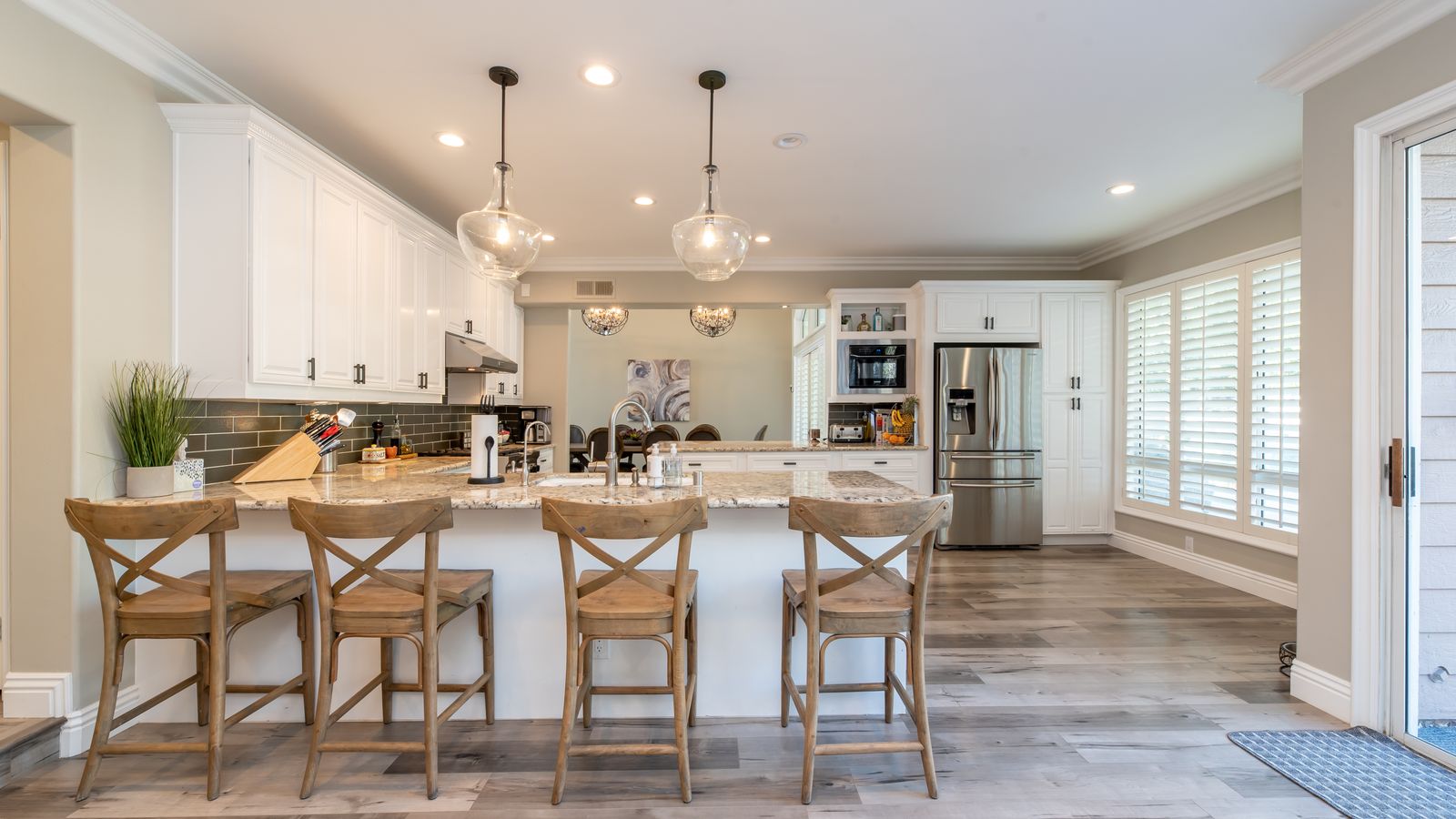
Pull up a stool while someone else is preparing breakfast. If you can sit down without asking them to stop opening drawers or move a coffee mug out of the way, you already have a good starting point for a kitchen perch. Give it a harder test by adding a second diner. People sit differently at a high counter, and two sets of knees and elbows reveal where the end of the surface really is.
Mock up the exact height and thickness of the surface, including any supporting bracket or apron below it. Sit on a stool with the kind of cushion you would actually use. Notice where your knees go and whether your feet find a secure place. Some people sit comfortably with both feet on a rung, while others need a different seat height or prefer a level place to stand from. The same stool can feel different once you pull close to an overhanging countertop. Have both people sit with their plates out, turn a little to speak and then leave. The point where one needs to wait for the other is part of the required footprint.
Assess the approach to the stool. Try picking it up carefully with a normal amount of floor available, or sliding it only if the floor and stool allow. A heavy chair can be more stable once occupied and awkward to pass around when left out. A fixed back may give useful support but stop short of the countertop instead of tucking away. Consider whether someone would use the spot at the proposed height. A seat beside a high counter may suit quick breakfasts for adults and work poorly for a younger child or a visitor who prefers lower seating. A nearby chair-height table can serve several uses if it does not share the busy passage.
Let the refrigerator, dishwasher and seat all open
Start the route from the place where the person cooking normally stands. Ask someone to sit at the proposed perch while you open the refrigerator and take out a large bowl. Check what the door does once it has swung fully and where you stand while putting the bowl down. Do the same with the drawer you reach for when you are holding a plate. If part of the seat is in the natural route between those places, the person there becomes a part of the kitchen's choreography whenever they sit.
Try loading the dishwasher while the seat is in use. The open door may interrupt the most convenient way out of the stool. A second person might need to set dishes down while the first is working at the appliance. Test a stool at each end before assuming the seat has to be centered on the countertop. A slightly shorter seating arrangement can keep the seat nearest the appliance comfortable. A narrow table placed on another wall might reserve the right end of a still clear passage.
Look for how someone gets behind the person sitting. Does a coat brush their back while the person passes? Can a full grocery bag move without knocking into a seat? Backing out of a tall stool takes more concentrated effort than stepping from a chair at table height. Reserve enough clear floor for someone to find their footing. Test the movement while someone else walks past, with no hot food or drinks in the way. Consider keeping one stool most days and adding a spare only when the kitchen is quiet. A place to park the spare where it is truly out of the route makes that choice more useful.
Follow the bag, the crumbs and the used plate
A short meal leaves a surprising collection of objects. A mug and toast can share the counter with a phone or a bag waiting to leave. If the perch is the closest clear surface to the entrance, it can easily start to hold mail and spare objects. Check where these things usually land before changing the kitchen. Give visitors and residents an obvious spot to stop further from the meal surface. A shallow shelf or tray near the regular route might do the job without taking any of the knee room intended for the stools.
Try putting out a few ordinary meals at the mock-up. Set a bowl, glass and hot drink safely on the surface, with room where a hand can lift each object. See whether the surface will let people work on different ends without passing plates across cooking or prep tools. Pretend to clear the table and observe where crumbs would fall. A sturdy floor and an open route to clean it can make seating close to the center of a kitchen much easier to live with. If a little corner collects clutter under the counter, pick a way to reach it before a fixed panel makes the job harder.
Find a place for the used plates when someone is still cooking. The dishes might be able to travel directly to a second landing place by the sink, where they stay out of other food and utensils. They may need to wait for an appliance door to become free. Test the path from the stool at the same time someone else is serving from a pot. Shifting a seat nearer the place where you intend to clear dishes can improve one part of the morning and disturb another. One practical solution may be to let the diner set a plate on a nearby clear surface and keep the main work area available for the cook.
See the lights at the level of your eyes
Stand where you would wipe the counter. A pendant can make the surface feel bright and leave the bulb hidden. Once you sit, you may see the source directly, or see its sharp reflection on the glossy surface below. Try a light and a stool together at the intended heights before choosing a permanent placement. Move a plate and cup across the normal seating positions. If there is a patch of glare when you sit at the narrow end, see whether a diffuser or a different shade can improve the view without spoiling the light used by the person cooking.
Read a few lines of a book or look at a screen in the spot. Someone who eats breakfast there may also spend an hour sorting papers or working through a quiet afternoon. Observe how sunlight falls on the surface at the time those activities usually occur. A shade that changes how the reflection appears can make a bright kitchen more comfortable without turning it dark. At night, check the transition between a low light at the seating area and the brightest kitchen fixture. Independent switches give a quieter activity somewhere to happen when the rest of the kitchen winds down.
Look along the countertop from the person preparing food. The lamp may hang far enough forward that someone standing beside the seating spot can brush against it at shoulder or head height. Shift the location in a paper mock-up and see whether the seat stays evenly lit. Any fixture that is fixed to the building should be selected and installed with its intended location and requirements in mind. A movable lamp arranged safely nearby can help you learn whether that light will be useful before committing to the work.
Use a changeable option when traffic is close
A narrow table can give the day a clear place for meals with room for different seats. Run its length along a wall so one side stays open, then try sitting at the end. If the table helps when the cook and diner are in the room at the same time, its ordinary spot may become obvious. On a day when there are visitors, move the table only if it has a destination that remains useful. Check that it stands securely wherever you plan to use it. With a drop-leaf model, test the movement of the leaf and see whether the supporting parts catch knees.
One compact kitchen might have an island where two stools fit on the drawing. During the test the person on the inner stool backs into the open refrigerator. Swap the arrangement for one stool at the outer end and a little table just beyond the main kitchen, where a second diner has space. Set the normal breakfast items on both and switch places after a few minutes. If one person likes to stand while eating and the other likes to linger, a short counter area alongside the lower table may serve both without making the aisle permanently narrower.
When the kitchen serves as the exit in the morning, rehearse leaving after the meal. Retrieve a coat, pick up the bag and cross the room while the other stool stays occupied. If several people are looking for keys just behind the diner, a little shelf near the exit can pull that part of the routine out of the aisle.
Write a small breakfast plan before changing cabinetry. Include the seating height, useful depth beneath the front, exact appliance openings and the place for one occupied stool. Make separate notes about where bags land and how the lights look when you sit. Ask everyone who uses the kitchen to try the plan on a morning when two routines overlap. Where the layout feels unnecessarily tight, see what is gained by moving the seat before adding a fixed surface. A simple perch should make that part of the morning easier for both the person at the plate and the person in the kitchen.