Hang a dining light for conversation as well as meals
Test pendant scale and position under the conditions of an actual dinner.
Set the table at the position you use most
Look up at a dining pendant before buying one, then sit down. The second view is more revealing. A fixture that seems well centered from the doorway can hide a face at the end of the table, show a bright bulb from one chair or put the clearest light on the only part of the table nobody uses. Give the proposed light a job you can check. It needs to put enough light on the meal and leave the people around it easy to see. The fixture's shape can contribute to that comfort if its size and position match the way the room is used.
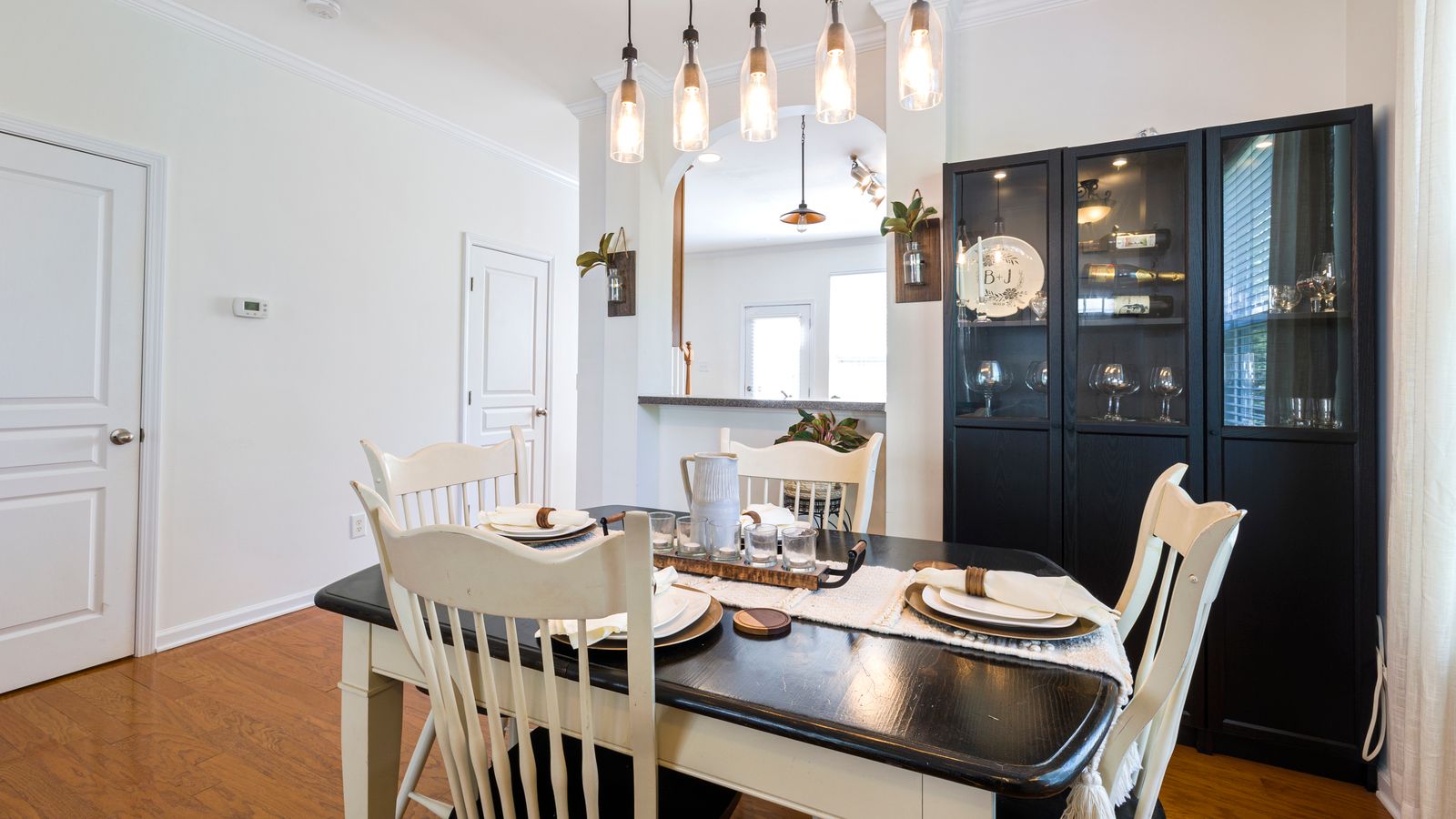
Set the table in its ordinary position. Put all the usual chairs around it, even the ones parked elsewhere most of the week. Put out plates or place mats and mark where bowls are passed from person to person. A baseboard, an uneven wall or the route past the table can make the real center different from the point you marked on a drawing. Take two measurements from convenient fixed references and write down where the proposed light will be above that position. Record the size of the table and see whether there is a different orientation you regularly use.
Make the proposed outline visible without touching any wiring. A lightweight paper drawing held from a safe position by a helper or a silhouette on an adjacent wall can help suggest the size. Avoid suspending anything from a live fixture, working from an unstable chair or putting a model where it can fall on people. If you can hold the sight line and the proposed position in one view, a simple outline will teach you enough to decide what else to investigate. Look through the tabletop area toward the rest of the room while making the check. A dining light shares that view with other objects even when it serves only one activity.
Sit at both ends and take the long view
A clear view runs from the smallest person to the tallest person and along the diagonal, not just across the middle. Sit in at least three places. Look at someone opposite you, then at somebody on the far diagonal. Ask whether you can see their whole face without leaning. Save a particular check for the end seats. Along a long table, a wide shade or a row of fixtures may sit inside that view even though it is well above eye level for people sitting side by side. Put any proposals for increasing the fitting height in your notes and ask how that would affect the light on the table.
Stand where people enter the room and where they serve food. A light over a stationary table can still be too low at its outer point if part of the table commonly slides out of the way and brings a standing route below it. Check the likely position during cleaning, gatherings and chair moves. Ask the supplier and installer about safe mounting and clearances. A sketch of the usual layout plus the exceptional one gives them a much better basis than height measured by one person at one seat.
Look sideways across the table at the things you usually put there. A vase or tall arrangement that seems ordinary with a high ceiling may compete with a deep shade. Notice whether the light throws a hard shadow around whatever you pass across the middle. If you use the table for a puzzle or board game, set one out in a different part of the same afternoon. Check whether the proposed direction would leave half the table clearly lit and one corner too dim for the things you need to see. One useful compromise could be an even pool through the middle with light from nearby walls for the rest of the room.
Try the room with the table extended
Place the leaf or sections the way you do when several people visit. Do this before treating the center of the everyday table as fixed. An extension may shift the center toward the window while leaving the old point convenient for many seats. Mark the two centers as separate points. Observe which end people come to first and which side is close to the main walkway. Use an ordinary cloth, placemats or light objects to picture the extent of each place setting. If somebody sits in what used to be the main route, the position of a low fixture deserves another look.
Imagine an everyday table that lengthens on the window side. A pendant centered on it in the short position might land closer to the opposite end when the room fills up. Instead of deciding that the fixture must serve the middle of both positions, ask where you need its strongest pool and which extra lamps or shades would help on a busy night. A wider distribution can work if glare remains controlled. A local light on a nearby sideboard can lift the dim end during occasional use, while a moving or suspended option should be considered with the installer's confirmation about support and intended operation.
Think through the main layout changes. A fixture can become awkward if the room later gets used with a smaller table or no table beneath it. If that is an expected change rather than a distant possibility, keep it in the design conversation while the fixing position is still open. Consider using a fixture whose position and height will work with both plans, or give more of the light to the room's surfaces. Ask what future adjustments a specific system is designed to allow. A fitting should be installed and operated as designed at both positions.
Judge the shade from below and the wall beside it
The material of the shade affects what arrives at the faces around the table. A fixture that sends most of its light straight down can make plates look clear and leave eyes in shadow. A shade that transmits light in several directions may soften the room but make the source too noticeable from low chairs. Look for a product demonstration or an approved working display where you can sit beneath the fixture at a similar height. Ask whether the bulb is visible from that angle and check changes in the outer surface when the light is on.
Compare finishes in the room. A light colored ceiling or wall may return a useful amount of light to the faces at the table. A deep finish may give the room a much different appearance with the same fixture. Look at your actual table, especially if it has a high sheen or a glass panel. From one seat, a reflection can be more persistent than a glimpse of the bulb. Check a sample layout using safe portable sources. A small experiment with a lamp beside a pale wall can reveal whether a little reflected light changes the balance you want.
Place a plate, a glass and a readable page where you would have them on an evening you want to enjoy. Compare what you can see under the existing light with a trial of a softer nearby source. Add one source at a time so you can trace the improvement. You might want the table light to be stronger while setting or clearing and gentler during the meal. Ask about the intended compatible bulbs and control if you want both states. The look through the shade is an easier comparison in a room you already know than under a bright display ceiling.
Have the fixing and control checked before ordering
Bring the two table arrangements, fixture dimensions and product instructions to a qualified installer. Talk specifically about the mounting support and location, the total weight and the clearance the product requires. Ask what the existing ceiling condition and controls permit, and confirm the instructions and local requirements that apply to the particular project. If dimming is part of the plan, ask about whether the fixture, light source and control are compatible at the expected settings. A product description that mentions dimming may not establish what will happen with the old control on the wall.
Discuss what else needs to happen at installation. The ceiling may need a finish repair if the new fixture base covers a different area. The person handling that work should know when the fitting can be installed and how the surrounding surface will be finished safely. Confirm what is included before the installer comes, especially if the desired position differs from the current one. If the table has been moved for access, leave clear marks and measurements for its normal location so everyone checks the same center.
Ask which surface needs to stay reachable for cleaning and replacement parts. A fitting made from several shades that look wonderfully light can still be awkward to dust if the supports and caps need special care. Save the product instructions and any information about compatible parts. That means the household can maintain a fixture according to its directions without trying to identify it while perched somewhere inconvenient.
Serve one ordinary dinner and adjust one thing
After safe installation, leave the table in the position people use daily and serve a meal. Notice faces when they turn slightly, the view from the smallest seat and whether you can read what is on a serving bowl before reaching past it. Ask people whether the light looks comfortable while looking at another person. Adjust one control or nearby lamp at a time so you can tell which change helped. Check the extended table at the next opportunity and make note of any place that needs more general light.
The dining light earns its place if everyone can finish clearing the table without reaching for a brighter source they normally keep off. If a seat feels more comfortable with a little light from the wall rather than a change in the pendant, try that small choice first. Finish by leaving an ordinary setting accessible at a normal switch. A fixture that disappears from conversation, even while giving the room a lovely center, has done what it came to do.