Choose cabinet wood tones in the room they will share
Work with grain, sheen and natural variation when comparing cabinet finishes.
Stand the door sample where the door would be
A cabinet sample spends much of its life on a display table. In the room, the same material will stand upright, close to a floor that reflects light and a counter that throws shadow. Put a door-size sample or the largest piece you can borrow against the proposed cabinet run. Stand it at the height you will see most. Step back to the place where you first enter the room and then look from the height of a nearby chair. The appearance from across the room matters because wood grain becomes part of the background to everything else.
Compare a sample in daylight and under the working lights you are going to keep. A strip of pale wood can look cool in the doorway and golden when a light reflects off a warm floor. Observe front and side at the same hour, and check a few hours later if direct light changes. Leave each sample up for long enough to notice the reflection and how the wood looks beside your familiar finishes. A shopping center's light can help narrow the list, while the actual room should decide the final pair.
Keep the samples labeled with names and exact finish information before moving them. Two finishes can look close in daylight and separate under a pendant. When you change one sample, put it in the same place at the same height. This helps separate a real difference from the effect of a strong stripe of light. Take a photo to remember the setup, recognizing that the phone may adjust color and exposure between frames.
Decide how much grain the room can carry
Look at the grain on a series of doors. A dramatic cathedral figure may appear attractive on a single large sample and create a strong rhythm when repeated at every cupboard. A quieter pattern can still look interesting over an island if individual fronts vary in a more subtle way. Ask for several pieces or a photo of finished doors in the same wood and finish. Find out how they were arranged and what range of variation the maker expects from one order.
Orientation has its own effect. Long vertical grain can visually connect several tall doors. Horizontal grain along wide drawers may emphasize their width. On a long bank of cabinets, discuss whether the grain is expected to line up across adjacent fronts. Continuous matching, slip matching or ordinary independent cuts can give different results and costs. The terminology varies by supplier, so ask for examples and draw a simple elevation showing the face of the run and any matching you actually expect.
Natural wood can vary in color, pores, knots and other marks. Veneer can show striking variation too, and the methods used to arrange it affect the result. Before choosing a finish name, ask what grade or range is supplied, whether samples represent both quiet and character-rich pieces, and how the installer can arrange doors within those choices. A larger range of subtle variation can be welcome. Give your supplier a specific visual example if there is a mark, strong contrast or direction you want to discuss before ordering.
Make the counter and floor part of the decision
Put the cabinet sample against the actual counter material. A close tonal match can be useful when you want a calm room, but examine the edge and the place where both reflect light. Two warm woods close in shade can become harder to pair when one has amber highlights and the other has a distinctly red grain. Try a clear separation using a counter with its own tone, or choose a finish that relates more closely to one material. The room can support contrast when the important pieces still look intentional together.
Look down and across as you normally move. Above a warm floor, a lower cabinet will receive more reflected light than an upper cabinet. A darker island may look different along the side facing a window and along the side looking into the room. A simple trick is to take the same sample to the opposite position and record which part of the room changed it. You are comparing locations rather than treating the finish as if it has one fixed appearance wherever it goes.
Include walls, nearby doors and items you expect to keep. A painted tall cupboard next to wood drawers can form a transition into another room. A change in cabinet color across a doorway is more visible when the same counter top continues through. If the room contains an inherited sideboard, look at its finish in place and decide whether it belongs in the same family or will be more interesting as a separate piece. More matching is only useful when it improves a real view.
Test the finish with a real handle and a real cleaning habit
Place the intended pull or knob against a sample. See whether the fastener and back plate fit the face in the way you expect, and check how light makes a shadow below the handle. A black pull can feel almost invisible on a very dark branch of grain but sharp over a plain pale field. A metal tone can borrow color from a nearby fixture. Make sure it remains easy to see and operate when you walk in without full lighting.
The finish, not just the stain, changes the care routine. Ask for written cleaning and repair guidance for the cabinet material, including the treatment of fingerprints or splashes. If the maker approves a test, use a duplicate finished sample and a mild routine that reflects what you intend to do. A high sheen can reveal wiping marks in raking light. A textured surface may need a cloth that gets into the grain without damaging the finish. An attractive sample in unused condition is only half the comparison.
Make sure adjacent pieces are included when the material is specified. A cabinet door, end panel, toe kick and trim piece may use different construction. Ask whether their exposures, edge bands and finish codes will match, and whether a specific range of color variation should be expected between them. Look at the transition near a corner where the eye can see two planes at once. The point of the sample is to resolve things like this before a room is full of installed pieces.
Follow one sample through an actual layout
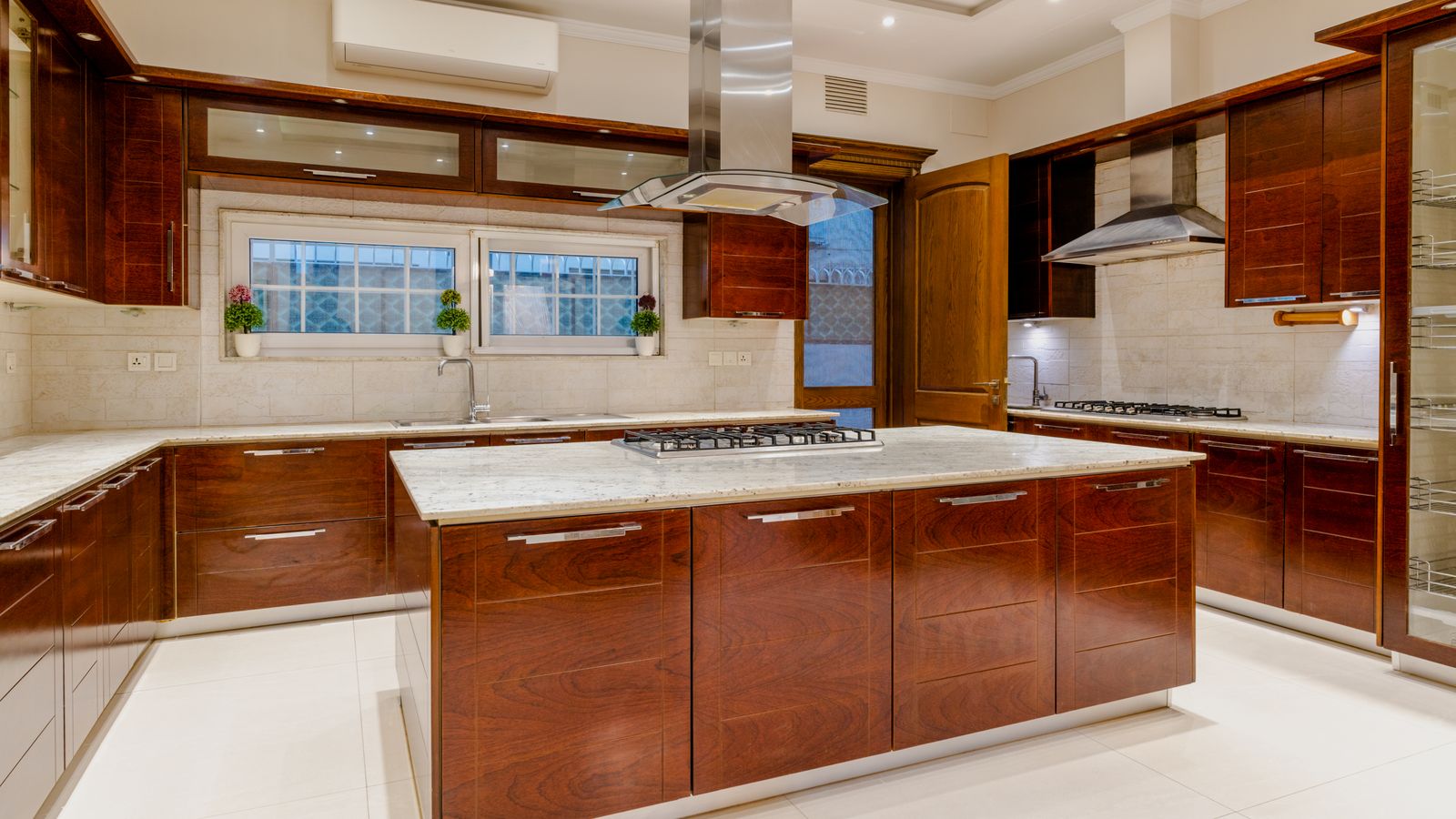
Consider a kitchen with a warm timber floor, pale counters and a short bank of tall pantry doors. Two samples are available. One is soft and subdued across the first door, while the other has darker sweeping lines. The more pronounced finish looks appealing by itself. Across the tall section it catches daylight in several places and competes with the floor. That might be welcome on a small island and too busy along the pantry.
Try the quieter door at standing height, with the handle positioned where it is proposed. Put the second sample at the island height and compare from the entrance. Repeat near the counter at night. If you prefer the same species throughout with different grain emphasis, ask the cabinetmaker what range and repeatability they can supply. If you prefer two finishes, check corner trims and exposed sides so the change has a deliberate stopping point.
Suppose the sample you preferred in the daytime appears too orange under the under-cabinet light. Compare the light's effect on the counter, wall and existing fixtures. A change to the light could make the whole space more pleasant if its normal work still benefits. A change to the finish may be reasonable if the light is already decided. Keep both options on the table until you have seen the real pairing in the place it will live.
Finish with a record you can hand to a supplier
Label the accepted sample with the supplier, material, product code, stain if applicable, sheen and intended locations. Keep it away from direct sunlight while it serves as a reference. Use the order or drawing to state which faces and panels you expect to share a finish and where variation is allowed. Ask what can change later if you need to replace one damaged front. Natural aging and future material batches can make an exact match difficult even with an accurate code.
Photograph the accepted sample in the installed room where appropriate, together with its label and a useful adjacent material. The photo is a reminder of the combination, and the physical sample is better evidence when a slight color difference matters. Write down who approved the finish and the date so the installer does not have to interpret a choice from a folder of old pictures.
Check the difference at the corner before final approval
A run with no exposed ends can hide the side-panel issue until the last cabinet in the row. Place the proposed side sample beside the door at a right angle and see how they look in light from the window and from across the room. A grain direction that mostly disappears face-on may become quite strong at the corner. Ask the supplier to confirm the finish on that panel and the finish on the matching trim in the same conversation.
Verify a plan you can live with as the room changes. Consider whether the wood already in the room will be refinished later or whether a new light could change the surface substantially. These do not all have to be solved now. They make it easier to choose a finish that still feels practical as the space is used, cleaned and maintained.